Most paid parking strategies focus on daytime hours. Charge from 8 AM to 6 PM, enforce during business hours, and call it a day. But for many property owners, that approach leaves half the clock on the table. Overnight and extended-hour parking demand is real, growing, and largely unmonetized across private lots nationwide.
Where Overnight Demand Comes From
You do not need to be next to an airport to have overnight parking demand. Several common scenarios create consistent need for extended-hour parking.
Downtown entertainment districts. People going to bars, restaurants, and concerts often leave their cars overnight rather than drive home. A vehicle that arrives at 8 PM and leaves at 10 AM represents revenue that a daytime-only model misses entirely.
Transit hubs. Lots near train stations and park-and-ride locations attract commuters who leave cars all day and sometimes longer. Weekend travelers may park Friday evening and return Sunday night.
Residential overflow. In dense urban areas, apartment residents without dedicated parking look for nearby private lots overnight. This creates reliable, recurring demand captured through monthly permits or nightly rates.
Business travelers. Lots near downtown hotels, convention centers, and business districts attract guests looking for cheaper alternatives to hotel garage rates.
Setting Up an Overnight Pricing Strategy
The key to overnight parking revenue is building a pricing structure that matches how people actually use your lot. A flat daytime hourly rate does not work for someone parking from 10 PM to 8 AM. You need rate tiers that make sense for extended stays.
Common approaches include a flat overnight rate (for example, $8 to $15 for parking between 6 PM and 8 AM), a 24-hour maximum rate that caps what any single parker can spend, and monthly overnight permits for recurring users who want a guaranteed spot. Modern scan-to-pay and LPR technology handles this automatically. You set the rules, the system enforces them, and parkers pay the correct rate without anyone staffing the lot at midnight.
Liability and Security Considerations
Property owners often hesitate on overnight parking because of liability concerns. What if something happens to a vehicle at 2 AM? What if the lot attracts unwanted activity?
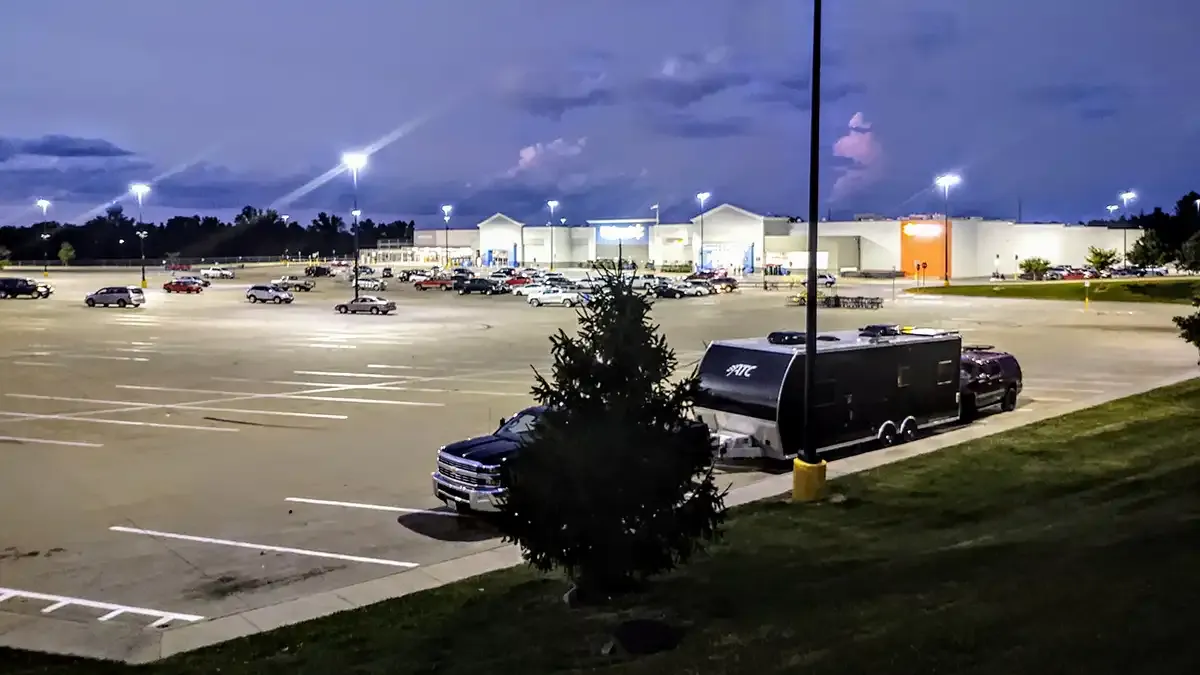
These are valid questions with practical answers. Adequate lighting is the single most important investment. A well-lit lot deters problems and makes parkers feel safe. Security cameras with visible signage add another layer of protection. Clear signage stating parking is at the vehicle owner's risk, combined with proper insurance coverage, addresses the liability side.
A lot full of parked cars is generally safer than an empty one. Occupied lots attract less vandalism and loitering than dark, vacant spaces.
Pairing Overnight Revenue with Daytime Operations
The real power of overnight parking is that it layers on top of your daytime revenue without competing for the same spaces. A lot serving office workers from 8 to 5 can serve downtown residents and bar-goers from 8 PM to 8 AM. The same 50 spaces generate revenue twice in 24 hours.
This is where technology matters. License plate recognition can automatically distinguish between daytime parkers, overnight parkers, and permitted vehicles, applying the correct rate to each without manual oversight.
The Bottom Line
If your lot empties out at 6 PM, you are only monetizing half your asset. Overnight parking demand exists in more locations than most property owners realize, and modern technology makes capturing it simple. The infrastructure is already built. The spaces are already there. All you need is a system that works while you sleep.