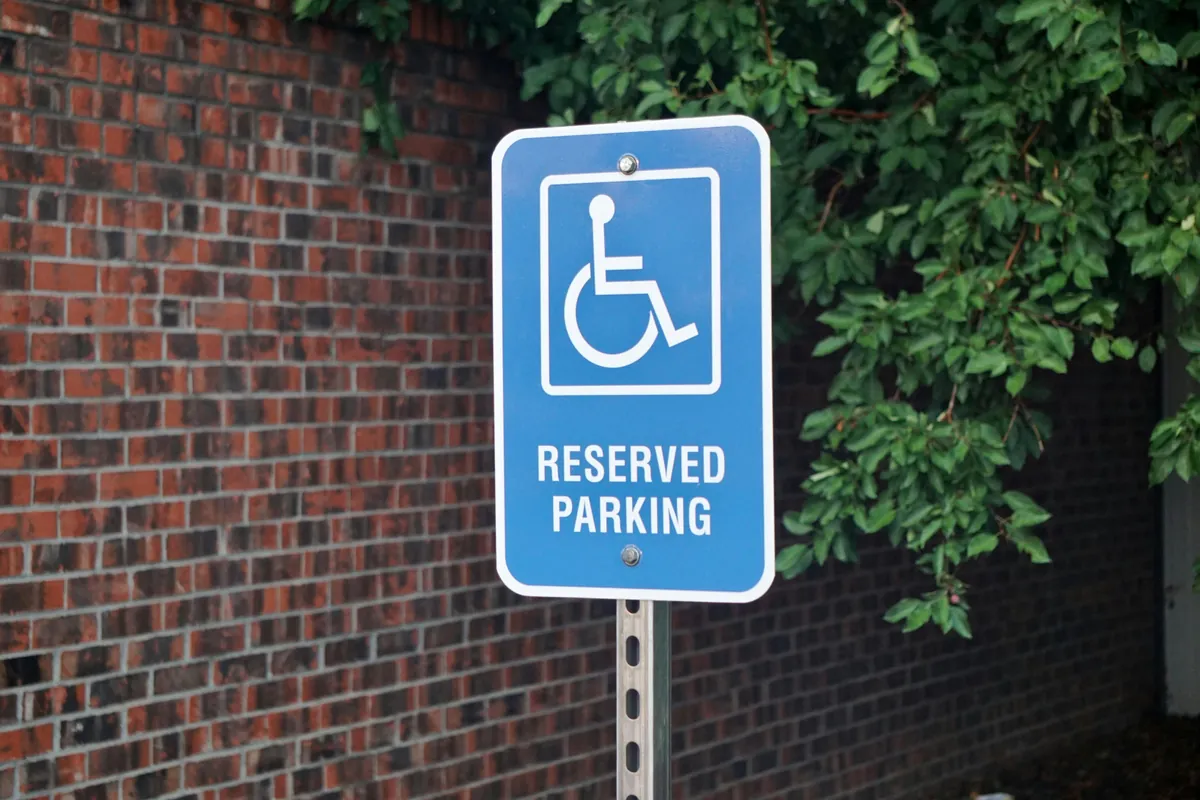
ADA compliance is not optional for parking lots open to the public. Federal civil penalties reach $118,225 for a first violation and $236,451 for each violation after that, but only the U.S. Attorney General can seek them. Property owners monetizing parking must meet federal accessibility requirements regardless of lot size.
Required Number of Accessible Spaces
The number of accessible spaces depends on total lot capacity. Lots with 1-25 spaces require one accessible space. Lots with 26-50 spaces require two. The requirements increase as capacity grows.
For 51-75 spaces, you need three accessible spaces. For 76-100 spaces, you need four. For 101-150 spaces, you need five. Beyond 150 spaces, add one accessible space per additional 25 spaces.
Calculate based on total capacity, not average utilization.
Van-Accessible Space Requirements
One out of every six accessible spaces must be van-accessible. Van-accessible spaces need access aisles at least 96 inches wide. Standard accessible spaces need 60-inch access aisles.
The access aisle can be shared between two accessible spaces if properly marked. Access aisles must be level, clearly marked, and part of an accessible route to the entrance or payment system.
Location and Surface Requirements
Accessible spaces must be located on the shortest accessible route to the facility entrance. For paid parking lots, locate accessible spaces closest to payment kiosks, elevators, or pedestrian exits.
Surfaces must be stable, firm, and slip-resistant. Gravel or grass lots do not meet ADA requirements. Accessible spaces need paved surfaces with slopes no greater than 2% grade.
Potholes or deteriorated pavement in accessible spaces create compliance issues.
Signage and Marking Standards
Each accessible space requires a sign displaying the International Symbol of Accessibility mounted at least 60 inches above the ground. This height prevents parked vehicles from obscuring the sign.
Van-accessible spaces require additional "Van Accessible" text below the symbol.
Ground markings alone do not satisfy ADA requirements. Vertical signage is mandatory. Signs must remain visible and legible.
Payment System Accessibility
Payment kiosks must have controls positioned within 48 inches for forward approach or 54 inches for side approach. Touchscreens and card readers must be within these reach ranges.
Kiosks must provide tactile buttons or audio assistance for customers with visual impairments. QR code payment systems meet accessibility standards when codes are positioned at accessible heights.
Enforcement in Accessible Spaces
Property owners can enforce payment requirements in accessible spaces. Customers with disabled placards must still pay unless your policy specifically exempts them. ADA does not require free parking for people with disabilities.
Some jurisdictions prohibit charging disabled placard holders. Check local laws before implementing payment requirements for accessible spaces.
Customers parking in accessible spaces without disabled credentials should be cited according to local regulations.
Common Violations and How to Avoid Them
Common ADA parking violations include insufficient accessible spaces, missing or improperly mounted signage, blocked access aisles, and inaccessible payment systems.
Conduct quarterly audits checking accessible space count, signage condition, surface quality, and access aisle clearance. Document compliance with photos.
Who Can Impose These Penalties
The figures above are available only in enforcement actions brought by the Attorney General. A private individual cannot trigger a civil penalty no matter how clear the violation, and the Department of Justice tends to pursue systemic problems, such as one operator applying the same non-compliant layout across many sites, rather than a single lot with a missing sign.
A private lawsuit produces a court order to fix the problem and payment of the plaintiff's legal fees. Federal law provides no damages to the plaintiff. The practical cost of getting this wrong is therefore the remediation already owed, plus their lawyers and yours. Some states provide their own damages remedies on top of the federal claim, so check state law before assuming the federal picture is the whole exposure.
Penalty maximums are adjusted for inflation. The figures above took effect July 3, 2025 and remain current as of August 2026; no adjustment was issued for 2026 because the required inflation data was not published. Verify against 28 CFR 85.5 before relying on them.