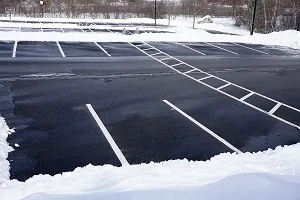
Winter weather reduces parking lot revenue through decreased utilization, increased operating costs, and weather-related closures. Property owners in snow regions need strategies that maintain income while managing snow removal expenses and liability risks.
Snow Removal Costs and Responsibilities
Professional plowing costs $75-200 per event for typical commercial lots. Properties requiring 10-15 plowing events annually spend $750-3,000 on snow removal.
Contracts specify either per-event pricing or seasonal flat rates. Per-event pricing creates unpredictable costs but saves money in light winters. Seasonal contracts provide budget certainty.
Establish clear snow depth triggers. Most agreements specify plowing at 2-3 inches. Property owners must maintain safe, accessible parking regardless of weather. Clear accessible spaces and access aisles first to maintain ADA compliance.
Liability During Winter Weather
Property owners must exercise reasonable care removing snow and ice. Most jurisdictions provide limited protection during active storms, but liability resumes once precipitation stops. Reasonable post-storm clearing timeframes typically range from 6-24 hours.
Ice creates greater liability than snow. Apply ice melt or salt to prevent ice formation, especially in shaded areas and slopes. Budget $100-300 annually for ice melt products.
Post signage stating customers park at their own risk during inclement weather.
Seasonal Pricing Adjustments
Some operators reduce winter rates when snow banks reduce capacity. If winter snow consumes 15-20% of spaces, lowering rates by 10-15% maintains competitive pricing.
Others maintain stable year-round pricing, treating snow removal as a normal operating expense. This works better in markets with consistent demand.
Monthly pass holders expect rate consistency. Build winter costs into annual pricing rather than adjusting seasonally.
Communicating Weather-Related Closures
Heavy snow sometimes requires temporary closures for clearing. Communicate through website updates, payment system notifications, and signage. Provide 2-4 hours notice when possible.
Schedule clearing during lowest-demand periods. Early morning closures (6 AM to 10 AM) affect fewer customers than midday closures.
Monthly pass holders need direct notification via email or text. Offer prorated refunds for extended closures exceeding 12 hours.
Snow Storage and Space Management
Plowed snow consumes parking capacity. A 100-space lot might lose 10-15 spaces to snow piles during heavy winters.
Designate snow storage areas away from high-value spaces. Stack snow in corners or peripheral spaces rather than prime parking near entrances.
Properties in heavy-snow climates may need snow removal services that haul away accumulated snow. Budget $200-500 for snow hauling in extreme winters.
Winter Maintenance Beyond Snow
Cold temperatures create pavement problems that require attention. Freeze-thaw cycles expand cracks and create potholes. Address pavement damage in spring before it worsens.
Lighting becomes more critical during winter's shorter days. More parking occurs during dark hours, making lot lighting essential for safety and customer comfort.
Heating systems for payment kiosks prevent freeze-related equipment failures. Touchscreen failures in subfreezing temperatures create revenue loss when customers cannot pay.
Winter parking revenue faces pressure from removal costs and reduced utilization, but clear policies, strategic pricing, and proactive communication minimize losses while maintaining safe operations.