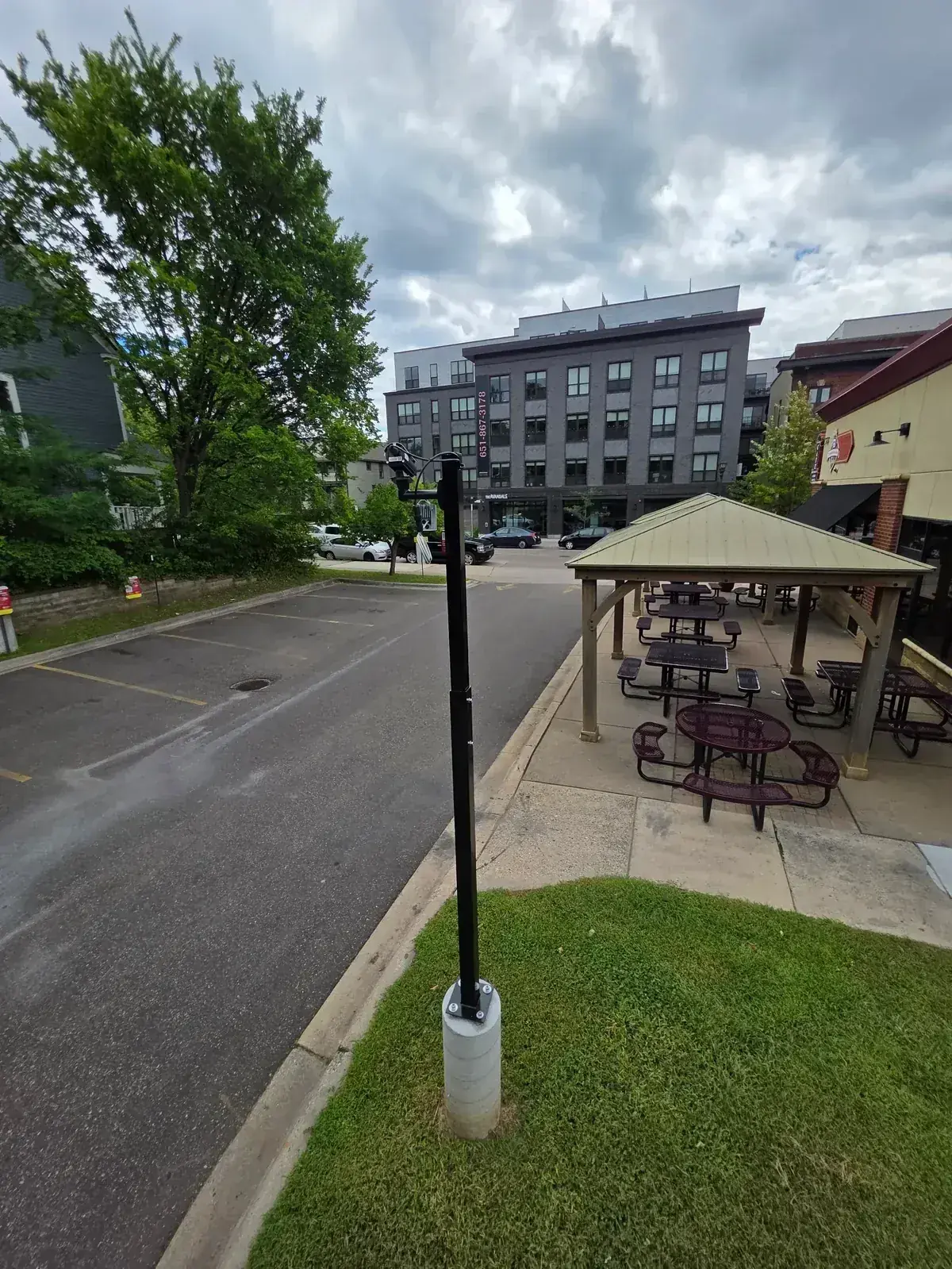
Your parking lot is often the first and last place visitors interact with your property. A poorly lit, unmonitored lot creates liability exposure and drives away customers. But over-investing in security hardware you do not need wastes money.
Finding the right balance depends on your location, traffic patterns, and risk tolerance. Here is how to think through your options.
Lighting: The Foundation of Parking Lot Security
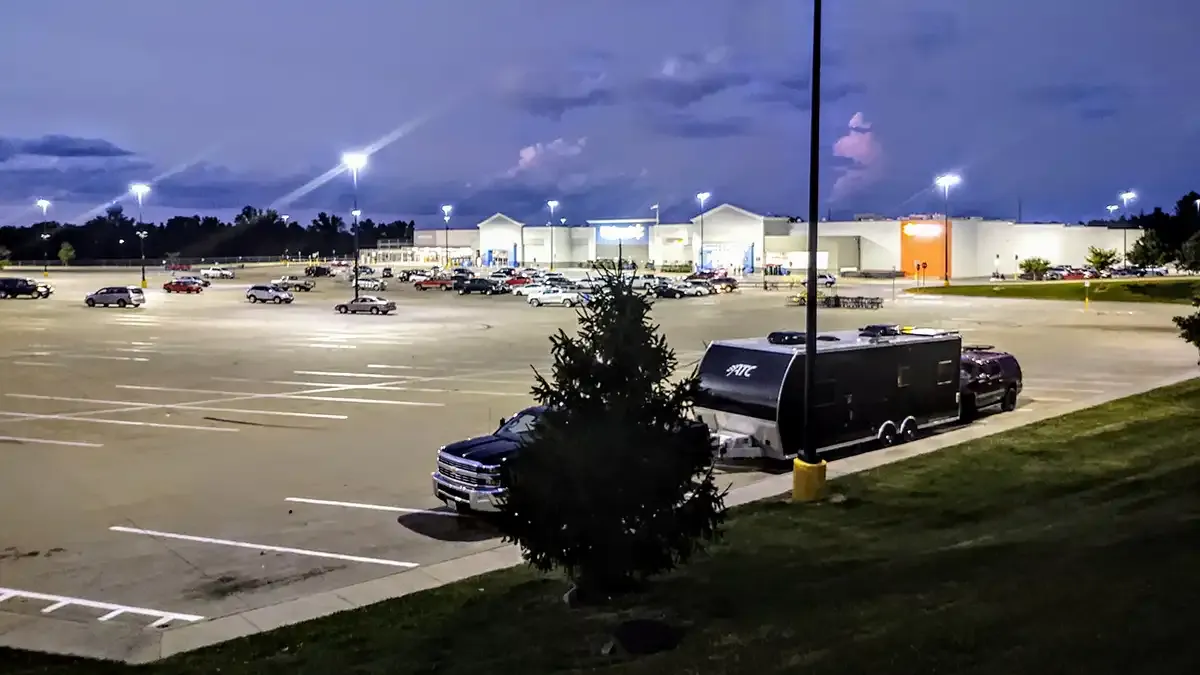
Good lighting is the single most effective security measure for any parking lot. It deters criminal activity, reduces accidents, and makes visitors feel safer.
What adequate lighting looks like:
- Minimum 1 to 5 foot-candles throughout the lot (brighter near entrances and walkways)
- Consistent coverage with no dark pockets between fixtures
- LED fixtures for energy efficiency and longevity
- Timers or photocells to ensure lights activate at dusk
Most municipalities have minimum lighting requirements for commercial parking areas. Check local codes, but treat them as a floor, not a ceiling. If your lot feels dark when you walk it at night, it probably is.
Upgrading to LED lighting typically pays for itself within two to four years through energy savings, even before factoring in reduced liability risk.
Cameras: When They Make Sense
Security cameras provide documentation and deterrence, but they are not always necessary.
Consider Cameras If
- Your lot experiences regular break-ins or vandalism
- You have had slip-and-fall claims and need documentation
- Your lot serves high-value tenants or sensitive facilities
- Local crime rates are elevated
You May Not Need Dedicated Security Cameras If
- Your lot is small and well-lit
- You already have license plate recognition (LPR) for parking enforcement
- The cost outweighs your actual risk exposure
Modern LPR systems capture plate images with timestamps for every vehicle entering and exiting your lot. While not a replacement for full security coverage, this creates a useful record that can help identify vehicles involved in incidents. If you are implementing paid parking with LPR, you get a baseline level of documentation at no additional cost.
Monitoring: Active vs. Passive Approaches
Cameras only help if someone reviews the footage. You have a few options.
Passive monitoring means recording footage and reviewing it only when an incident occurs. This is the most common approach for smaller lots. It costs nothing beyond the camera hardware but provides no real-time response.
Active monitoring involves a security company watching your feeds live and dispatching responders when issues arise. This adds monthly fees ($100 to $500+ depending on coverage) but provides genuine intervention capability.
Automated alerts fall somewhere in between. Some camera systems can detect motion or unusual activity and send notifications to your phone. You become the monitor, which works if you can respond quickly.
For most private parking lots, passive monitoring with good lighting is sufficient. Active monitoring makes sense for high-risk locations or properties where liability exposure justifies the cost.
The Paid Parking Connection
Implementing paid parking often improves security as a side effect. LPR systems log every vehicle. Signage signals that the lot is actively managed. The presence of enforcement, even automated enforcement, discourages people from treating your lot as a place to loiter or engage in unwanted activity.
You do not need a separate security strategy and parking strategy. In many cases, they overlap.
Bottom Line
Start with lighting. It is affordable, effective, and often required anyway. Add cameras if your risk profile justifies them, and consider how LPR for parking enforcement might already cover your documentation needs. Active monitoring is a premium option for high-risk situations.
The goal is proportional investment: enough security to protect your property and visitors without overspending on hardware you will never use.