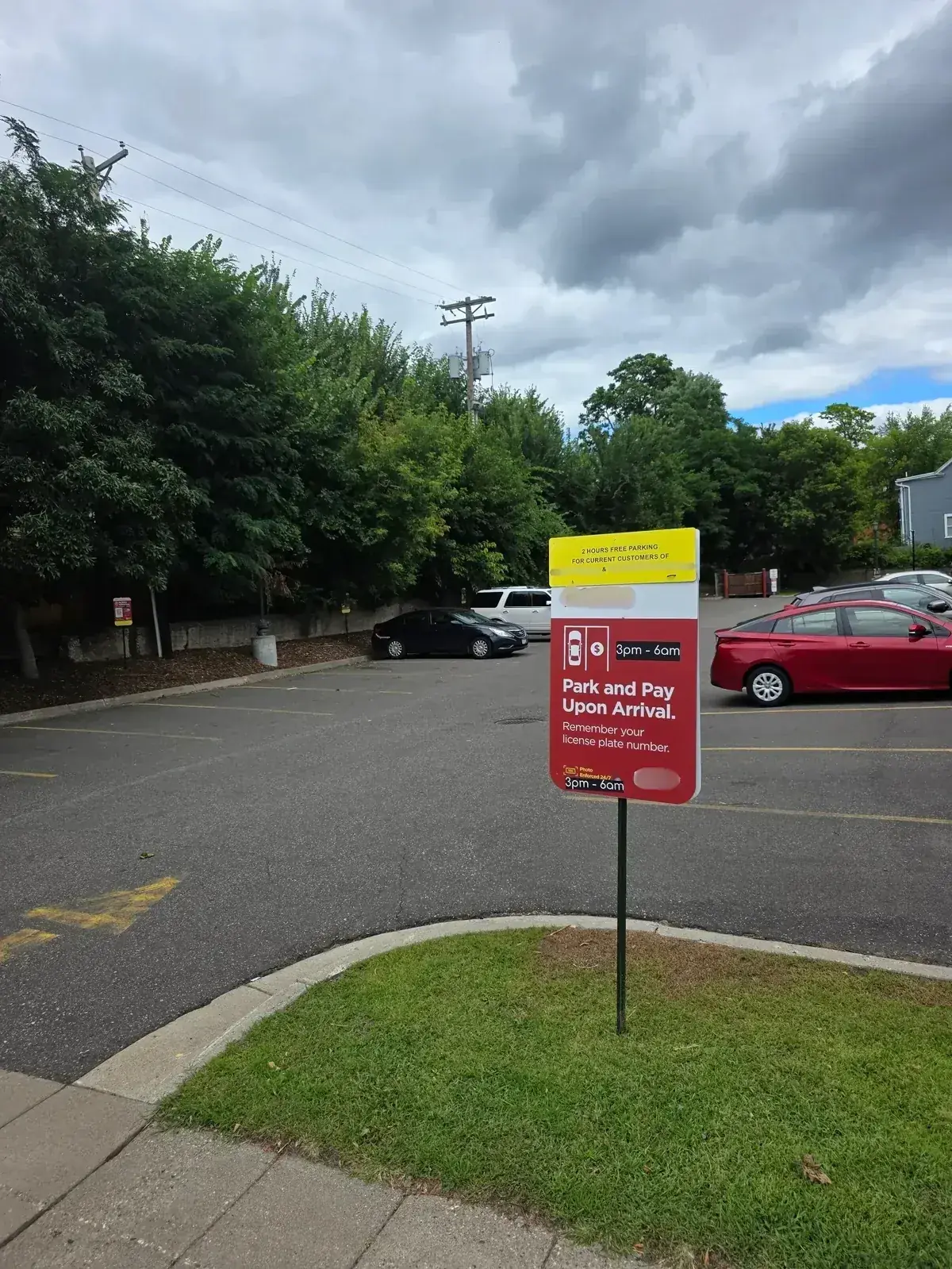
Scan-to-pay has become the standard for modern paid parking. Drivers see a sign, scan a code with their phone, and pay in seconds. No app download required. No fumbling for coins. No ticket machines to maintain.
For property owners considering paid parking, understanding how scan-to-pay actually works helps cut through the confusion and vendor jargon. Here is a straightforward breakdown.
The Driver Experience
From the driver's perspective, scan-to-pay is simple.
- They park and notice a sign with a QR code
- They scan the code using their phone's camera
- A mobile payment page opens in their browser
- They enter their license plate, select a duration, and pay with a card or mobile wallet
- They receive a confirmation and go about their day
The entire process takes under a minute. There is no app to download, no account to create, and no paper ticket to keep track of. When time runs out, most systems let drivers extend their session remotely without returning to their vehicle.
What Happens Behind the Scenes
When a driver completes a payment, several things happen automatically.
The system logs the transaction. License plate, payment amount, start time, and expected end time are all recorded. This creates a real-time database of who has paid and who has not.
Enforcement becomes automated. If your lot uses license plate recognition (LPR), cameras compare plates against the payment database. Vehicles without valid payment are flagged for review or citation. If you use manual enforcement, staff can check plates against the system using a mobile app.
You receive the revenue. After processing fees (typically 15% to 30% depending on the provider), funds are deposited to your account on a regular schedule. Most providers offer dashboards where you can track payments, view reports, and monitor lot activity.
What Property Owners Need to Provide
The physical requirements for scan-to-pay are minimal.
Signage. You need signs displaying the QR code, payment instructions, and lot rules. Most providers supply these or provide templates. Signs should be visible at entry points and throughout the lot.
Internet connectivity. The system needs a way to transmit data. Some providers use cellular connections built into their equipment. Others may require Wi-Fi access. In most cases, this is handled without any involvement from you.
That is essentially it. Unlike traditional paid parking, there are no gate arms to install, no ticket dispensers to wire, and no pay stations to bolt down. The infrastructure lives in the cloud and on drivers' phones.
What About Drivers Without Smartphones?
This is a common concern, but it rarely causes problems in practice. Smartphone penetration in the US exceeds 90%, and most people who drive are comfortable using their phones for payments.
For the small percentage of drivers who cannot or will not use scan-to-pay, some providers offer alternatives like call-to-pay phone numbers or text-based payment options. In mixed-use lots, you can also maintain a grace period for quick stops.
Is Scan-to-Pay Right for Your Lot?
Scan-to-pay works best in lots where drivers are already conditioned to pay for parking, or where demand justifies the expectation. Urban areas, entertainment districts, and properties near restaurants and venues are natural fits.
The technology is proven, the driver experience is smooth, and the operational burden on property owners is close to zero. If you have been hesitant about paid parking because of equipment costs or complexity, scan-to-pay removes most of those barriers.
Learn more about comparing scan-to-pay and LPR to find the right technology for your property.