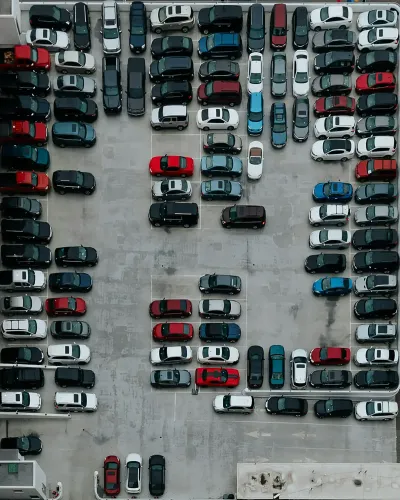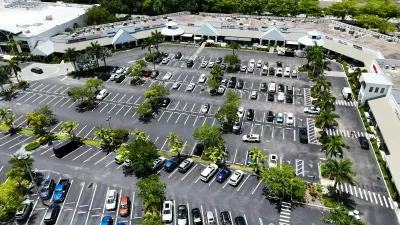

Most historic downtowns have a permanent parking problem. Streets built for horses cannot fit modern vehicles. Preservation rules prevent demolishing old buildings for surface lots. Dense mixed-use development concentrates demand into compact areas with limited supply.
Property owners treat this as a challenge. Smart ones recognize it as an opportunity.
The Supply Problem Isn't Going Away
Historic city centers were built between the 1800s and early 1900s, decades before cars became standard. Narrow streets accommodated pedestrians, streetcars, and horse-drawn wagons. Buildings packed tightly with minimal setbacks. Public squares served as gathering spaces, not parking areas.
These neighborhoods cannot expand parking without destroying what makes them valuable. Post-war suburban developments incorporated parking from day one with wide streets, mandatory minimums, and low-density zoning. Historic cores never had this advantage and cannot retrofit without massive disruption.
The result: structural parking deficits that will never get solved through new supply.
Demand Concentrates Where Supply Can't
The same compact design limiting parking supply also drives intense demand. Residents, office workers, shoppers, restaurant patrons, and tourists all compete for spaces in a few square blocks.
A typical historic downtown packs 200 apartments, 50 retail shops, 30 restaurants, and 100,000 square feet of office space into 10 walkable blocks. Everyone needs parking in the same limited area.
During peak times this creates severe shortages. Weekend dinner crowds find every street spot taken. Lunchtime shoppers circle repeatedly. Office workers arriving after 9 AM hunt for anything available.
Property owners with parking in these districts control scarce assets during high-demand periods.
Visitors Pay Premium Rates
People visiting historic districts expect to pay for parking. The alternative is circling for 20 minutes hoping a street spot opens. Most choose to pay $15-30 for guaranteed parking near their destination.
These aren't price-sensitive parkers. They're dining at upscale restaurants, attending theater performances, visiting galleries, or staying in boutique hotels. Parking cost matters far less than convenient access.
Dynamic pricing captures this willingness. Charge higher rates Friday and Saturday evenings when restaurants fill. Premium pricing during special events and festivals. Lower rates for weekday office workers who arrive early and stay all day.
License Plate Recognition works particularly well in historic settings. No gates, pay stations, or modern equipment conflicting with historic character. Enforcement happens invisibly while maintaining architectural integrity.
All-Day Parkers Block Revenue
Free or cheap parking gets occupied immediately by employees and residents arriving early. Prime spots near shops and restaurants stay filled all day by people who parked at 8 AM.
Restaurant customers circling at noon find nothing. Shoppers give up. Evening diners park six blocks away.
Time limits paired with pricing solve this. Make all-day parking expensive. Keep rates reasonable for 2-3 hour visits. Spaces turn over multiple times throughout the day instead of staying occupied by single vehicles.
More turnover means more customers access businesses, higher revenue per space for lot owners, and better economic activity for the district.
Validation programs work well. Partner with nearby restaurants and shops. Customers spending $50 get parking validated, driving business traffic while capturing revenue from non-validated parkers.
Location Determines Revenue
Not all historic district parking performs equally. Location near restaurants, entertainment venues, and tourist attractions significantly increases value. Weekend and evening demand patterns matter more in districts with strong restaurant and nightlife scenes.
Understanding these patterns determines pricing strategy and revenue potential. Property owners often underestimate what their historic district parking could produce because they've never analyzed actual demand patterns and competitive pricing.
Use the revenue calculator to estimate what your historic district parking lot could generate based on location, space count, and demand patterns.
Stop leaving money on the table in high-demand historic areas where scarcity creates permanent revenue opportunities.